
How Hot Is a Habanero? A Scoville Scale Guide
THE SHORT ANSWER
A habanero rates 100,000–350,000 SHU (Scoville Heat Units) — roughly 12 to 140 times hotter than a jalapeño (2,500–8,000 SHU), but well short of a ghost pepper or Carolina Reaper.
It is a genuinely hot chilli, but with a bright, fruity heat that hits fast and fades cleanly — which is exactly why it is our chilli of choice.
"How hot is a habanero?" is the question we get most. The short version is above — here is the fuller picture: where habaneros sit on the Scoville scale, what that heat feels like, and how we build our sauces around it.
What the Scoville scale measures
The Scoville scale rates chilli heat in Scoville Heat Units (SHU) — a measure of how much capsaicin, the compound that makes chillies hot, a pepper contains. A capsicum (bell pepper) sits at 0 SHU; pure capsaicin is around 16,000,000. Most chillies live somewhere in between.
SHU is a range, not a fixed number: growing conditions, ripeness and even the individual pepper all shift the heat, which is why habaneros are quoted as a band rather than a single figure.
Where a habanero sits
So a habanero is properly hot — but it is the fruity, aromatic end of hot, not the punishing extract-heat of a superhot. That balance is why we build our flagship sauce around it rather than something hotter.
| Chilli | Scoville Heat Units (SHU) |
|---|---|
| Capsicum (bell pepper) | 0 |
| Jalapeño | 2,500 – 8,000 |
| Serrano | 10,000 – 23,000 |
| Cayenne | 30,000 – 50,000 |
| Habanero | 100,000 – 350,000 |
| Ghost pepper (bhut jolokia) | ~1,000,000 |
| Carolina Reaper | 1,600,000 – 2,200,000 |
What habanero heat actually feels like
Habanero heat is fast and front-of-mouth — you feel it on the lips and tip of the tongue within a second or two, it peaks quickly, then fades cleanly rather than building relentlessly.
Underneath the burn there is real flavour: habaneros are floral and fruity, and people often catch apricot or citrus notes. That fruitiness is why they pair so naturally with tropical fruit like mango.
How we use habanero heat
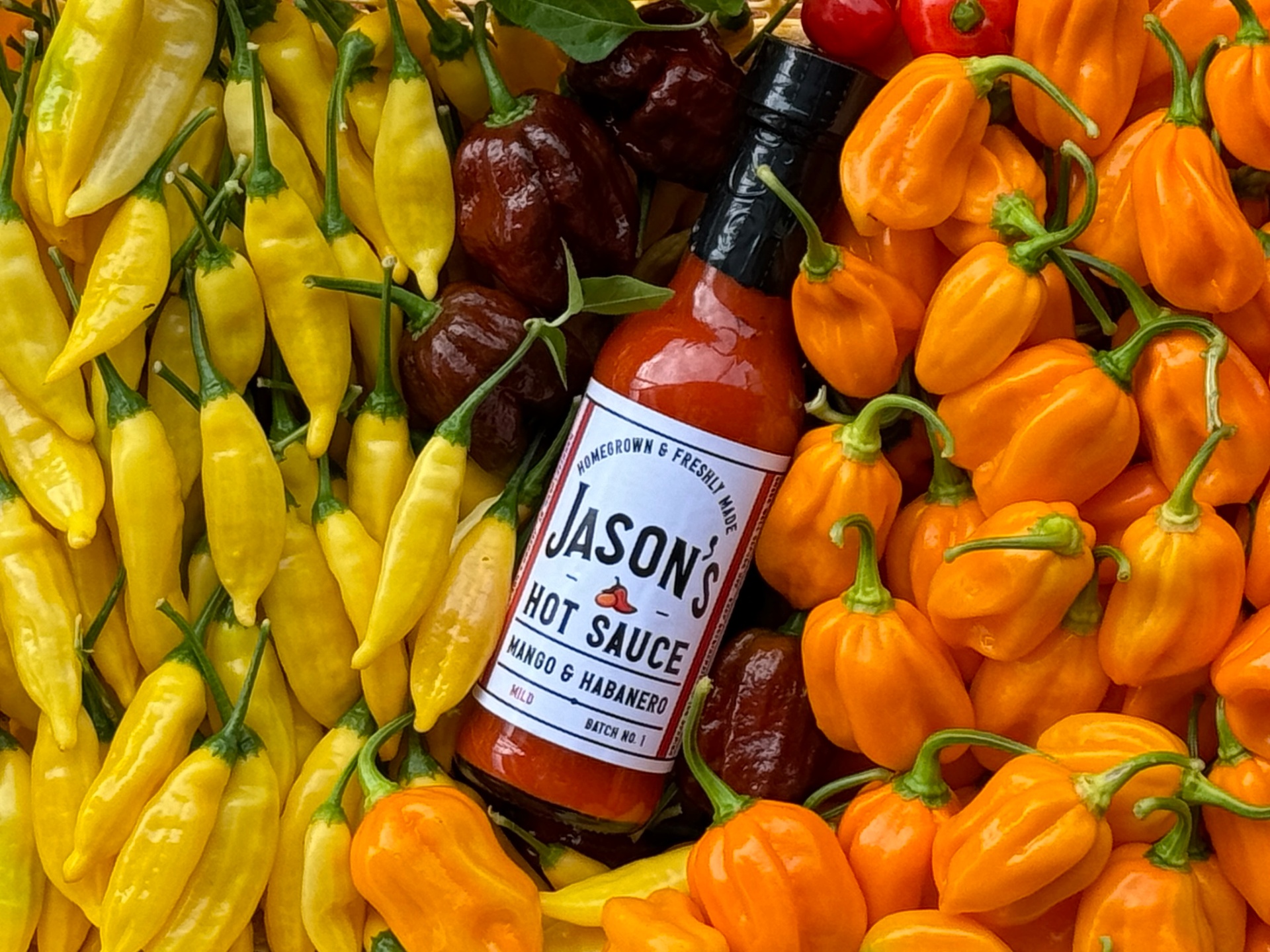
We are flavour-first, not heat-for-heat’s-sake. Our Mango & Habanero Hot Sauce comes in two heat tiers:
- Original — a medium heat. Enough habanero to notice and enjoy, balanced by ripe Australian mango. An everyday, pour-it-on-anything sauce.
- Extreme — a fuller habanero hit that builds and lingers, over the same mango backbone. For people who want the heat turned up without losing the flavour.
How to cool habanero heat
If a mouthful catches you out, reach for dairy or fat — not water. Capsaicin is oil-based, so water just spreads it around.
- Dairy — milk, yoghurt or sour cream. The casein in dairy binds the capsaicin.
- Something sweet or starchy — a piece of bread, some rice, or a spoon of sugar.
- Give it a minute — habanero heat fades faster than a superhot’s slow build.
COMMON QUESTIONS
Is a habanero hotter than a jalapeño?
Yes — significantly. A habanero (100,000–350,000 SHU) is roughly 12 to 140 times hotter than a jalapeño (2,500–8,000 SHU).
Is a habanero the hottest chilli?
No. Habaneros are hot but sit well below superhots like the ghost pepper (~1,000,000 SHU) and Carolina Reaper (over 1,600,000 SHU). They are prized more for flavour than record-breaking heat.
How do you cool down habanero heat?
Reach for dairy (milk, yoghurt) or something sweet or starchy — not water. Capsaicin is oil-based, so water only spreads it around.
What does a habanero taste like?
Beyond the heat, habaneros are bright, floral and fruity — often described as having apricot or citrus notes — which is why they pair so well with mango.